Abundant Futures
Abundant Futures is a long-term, socially engaged project commissioned by ArtHouse Jersey, led by Dana Olărescu in collaboration with contributing artists, academics, and organisations such as dhaqan collective, Kaajal Modi, Olha Pryymak, William Bock, Mariana Pinto Leitão Pereira, and Counterpoints. Focusing on food justice, the project aims to amplify existing insights and expertise within migrant communities and native populations regarding sustainable growing practices, soil regeneration, and food resilience in the face of the climate crisis.
The project includes creative workshops for people from migrant backgrounds, visits from international artists working with plant, food, and soil knowledge, research interviews conducted by academic Mariana Pinto Leitão Pereira, and participant-led public sessions showcasing their resources, capabilities, and agency. By using food as a catalyst, Abundant Futures honours the diverse knowledge and skills that participants bring from their homelands, fostering new cultures and working to nourish future generations.
Dana is building platforms where migrant communities on the Island co-build and amplify the ‘local’ through global voices and cultural diversity. So far, she has led workshops in different community spaces, and has had individual conversations with people as a way to invite them to run their own workshops in 2025. Throughout the project, Dana is mentored by Counterpoints’ Senior Producer Dijana Raković.
An article written for Create Ireland news encompasses the project’s development so far. It can be read here.
In the first year, Abundant Futures saw Fozia Ismail, Kaajal Modi, and William Bock, develop three distinct projects with varied communities. In its second year, artist Olha Pryymak curated Kupala Festival, a traditional Ukrainian midsummer celebration. In its third year, Mariana Pinto Leitão Pereira conducted academic research asking ‘What Does It Mean to Be Local?’, and is preparing to launch the report ‘Mapping Narratives of Locality in Jersey's Communities’.
Kaajal joined Abundant Futures in April 2024 with Native Tongues, a project exploring the relationship between land, language, and food biodiversity. The project connects older Jèrriais speakers with migrant children learning the language to rediscover traditional practices of soil care and envision more generous relationships with other species. In partnership with L’Office du Jèrriais, Kaajal led six children on a seaweed foraging trip with Kazz Padidar, where they discovered seaweeds new to Jersey’s coastline, some of which lacked Jèrriais names. The children named eight of these seaweeds, and their contributions were added in the official Jèrriais dictionary.
Trudie Trox of Jersey Walk Adventures taught Kaajal how to forage and prepare seaweeds, which later inspired a Native Tongues dinner, featuring dishes like sea spaghetti and chocolate pudding set with Irish moss. Local Jèrriais band Meli Melo performed, and Emily de Gruchy shared the history of the traditional bachîn.
Outcomes include the Native Tongues publication which contains information on the foraged seaweeds as well as recipes. This project is made possible with the support of L’Office du Jèrriais.
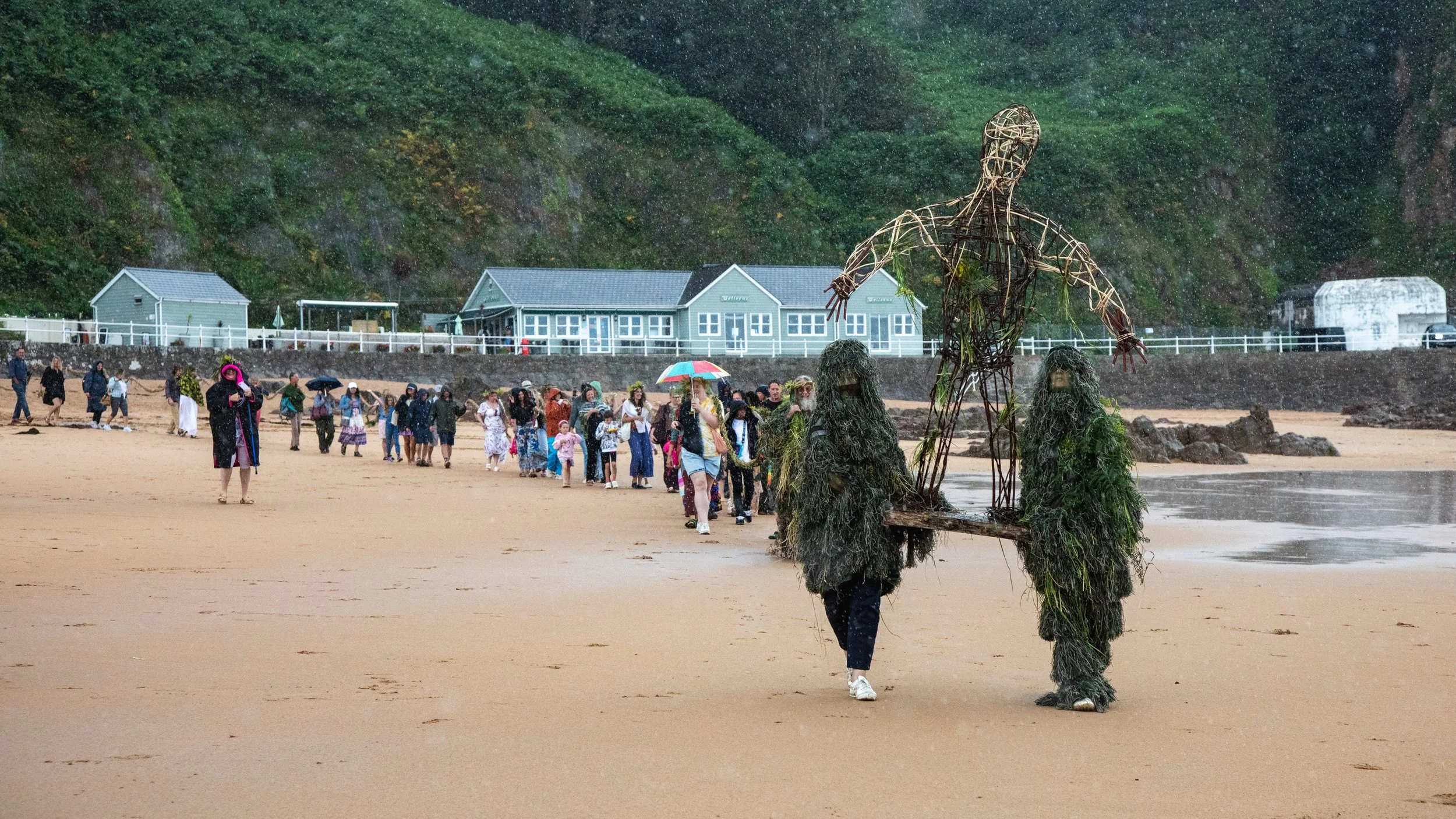
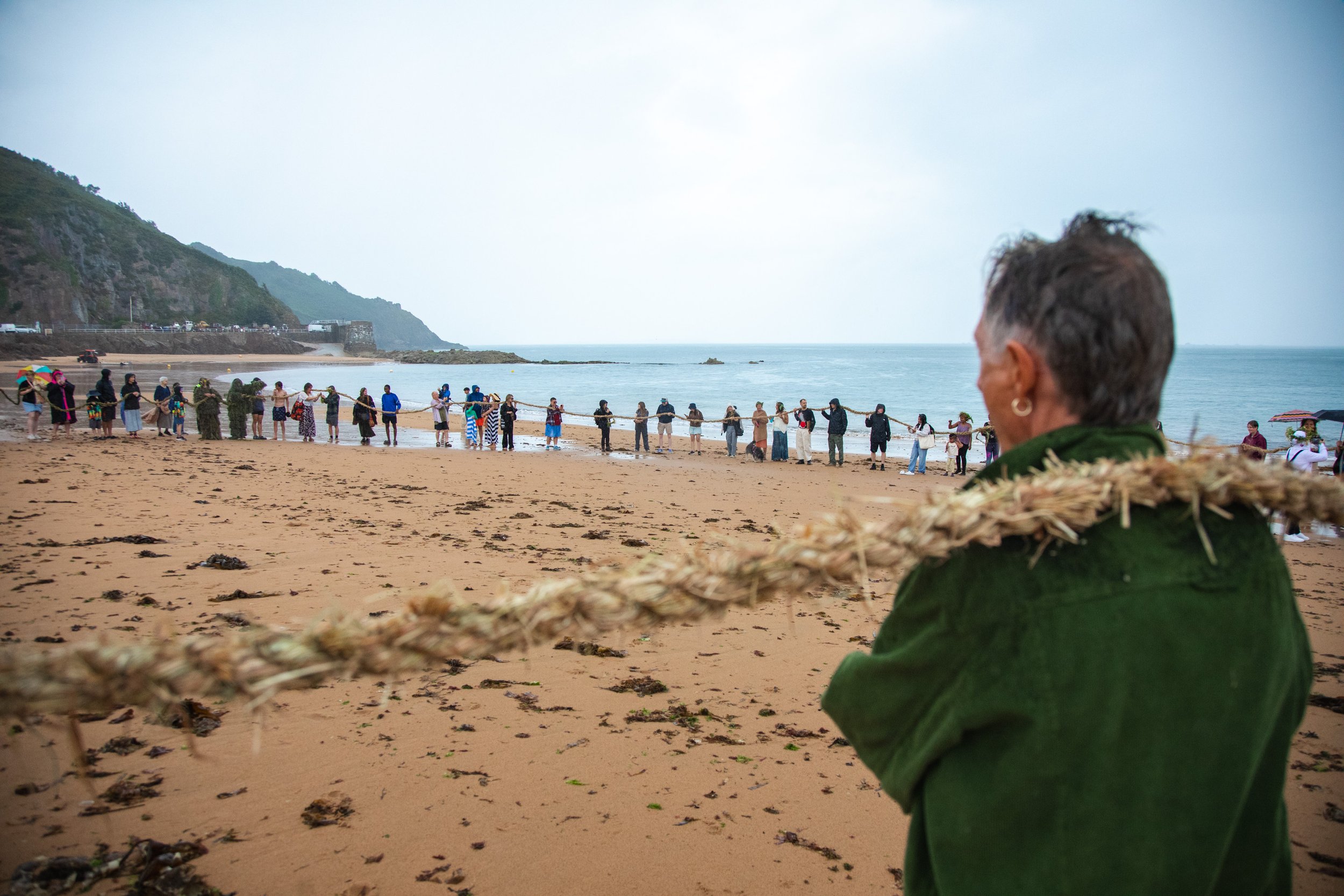
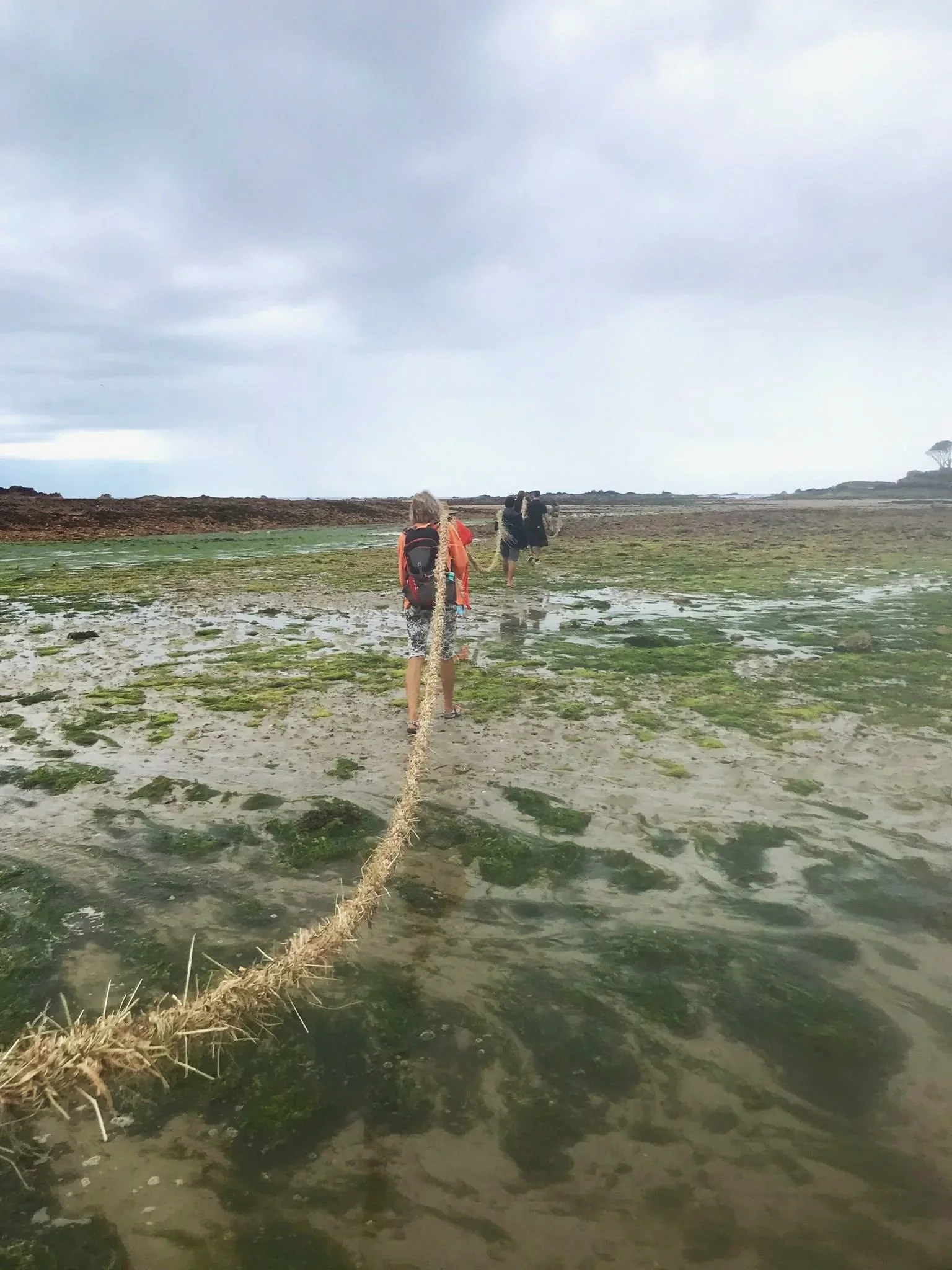
A multi-disciplinary artist based in south west Ireland and working internationally, William connected with local fishers and individuals with experience or memories of making rope, and led an all-day workshop on film-making using smartphones. Four participants, Amanda Bond, Luca Purcaru, Mylie Timms, and Vi Murphy, were selected from the workshop to use their phone cameras to capture footage during rope-making sessions in July. A few months later, William returned to conduct rope-making sessions over four days. His time was divided between setting up a stall at the Fish Market, where passersby stumbled upon the activity, and working in a public space off Broad Street. Rope-making requires four participants to twist the rope, which naturally encourages conversation among them. Over 800 people engaged in the activity, culminating in a public rope walk procession at the end of the week. Travelling from port to port, the 80 metre-long rope was carried by 17 people from La Rocque to St. Helier. William returned for Kupala Festival where the extended rope was carried to the Grève de Lecq beach by over 100 people.
FOZIA ISMAIL (DHAQAN COLLECTIVE)
Fozia Ismail is a researcher, creative producer and artist, and co-founder of feminist Somali duo, dhaqan collective. In Milk songs, here, there and everywhere, Fozia is exploring migrant rituals, stories, and songs related to the act of milking. How do these milk traditions relate to the story of the people who inhabit the Island, past and present? What insights can we draw from exploring the intimacy of this relationship between people, land and animals through the lens of milk cultures and song. Running workshops to capture stories, Fozia will create a sound installation blending sounds from the Jersey Archive and participants’ voices as a way to create a counter-archive. A work-in-progress sound installation took place at Hamptonne Country Life Museum in November 2024, supported by Jersey Heritage, and the full sound installation was presented at Kupala Festival in 2025.
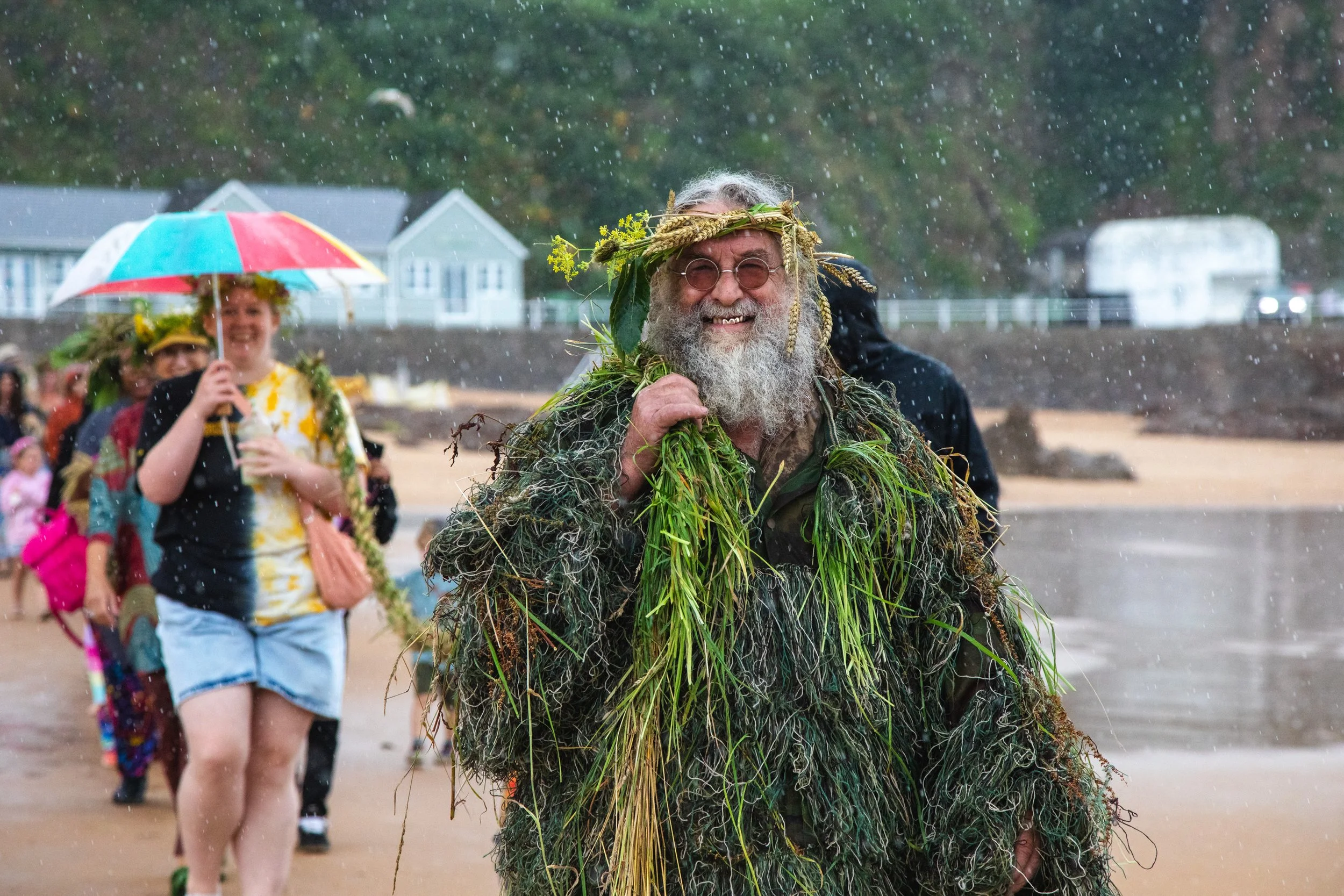
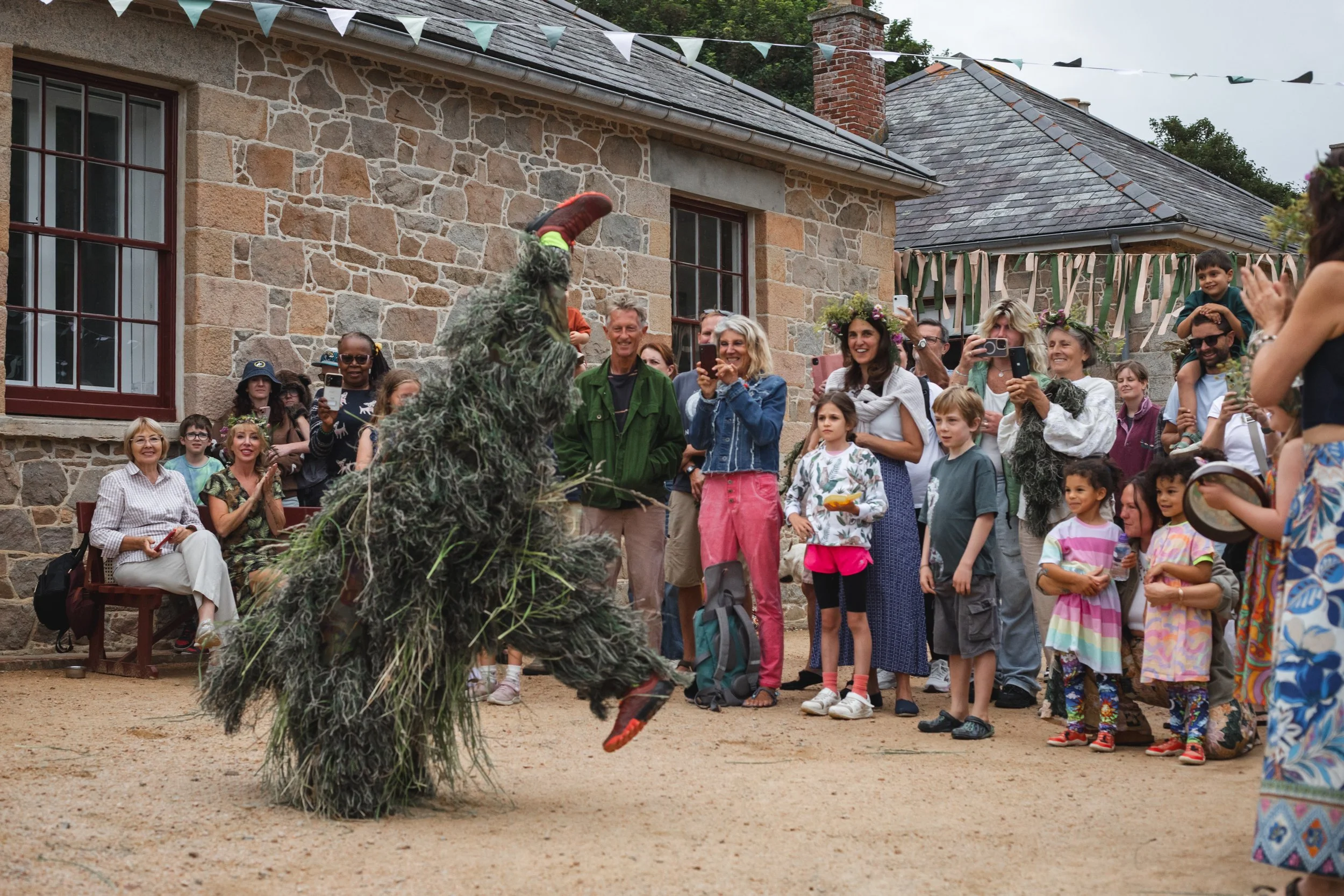
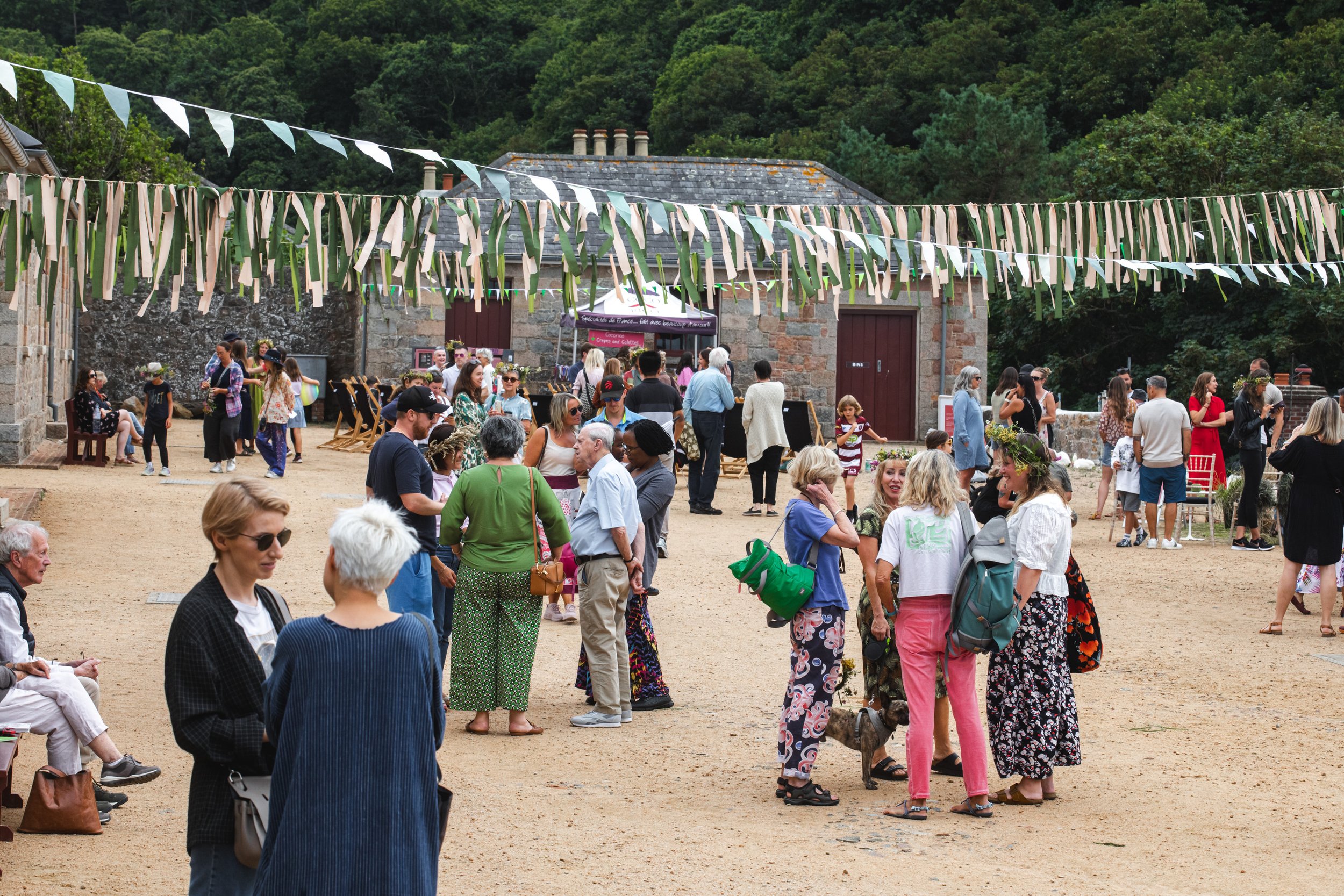
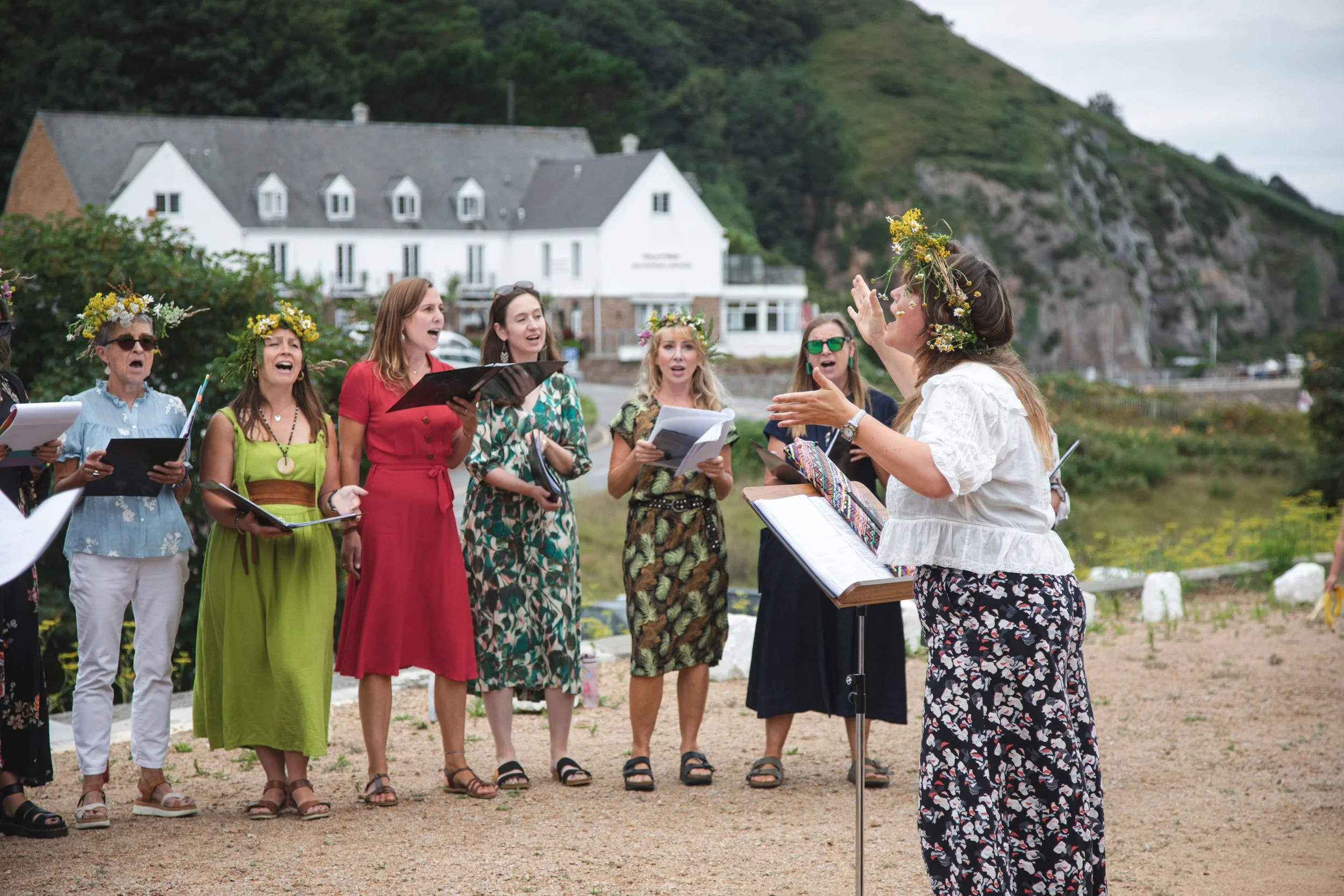
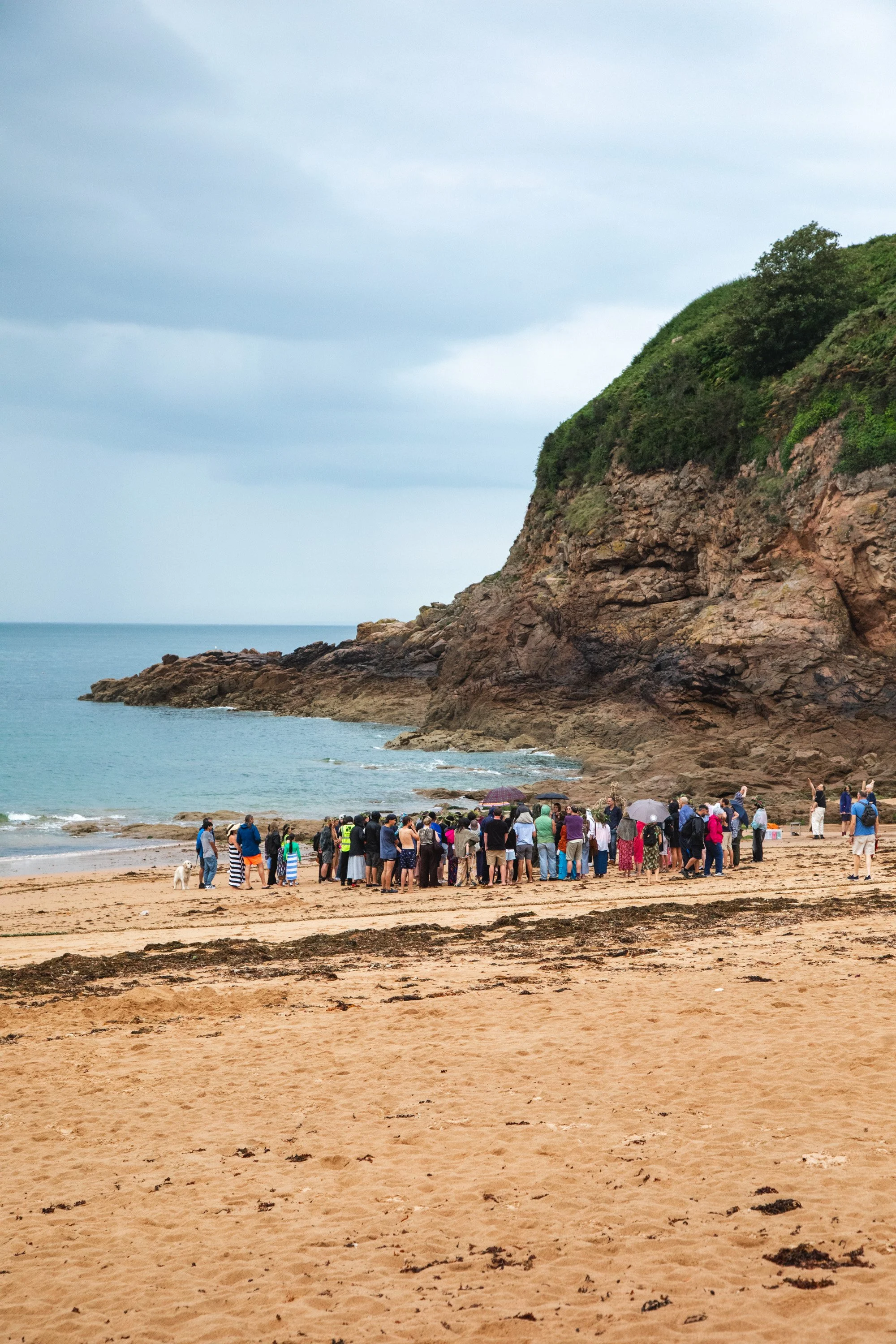
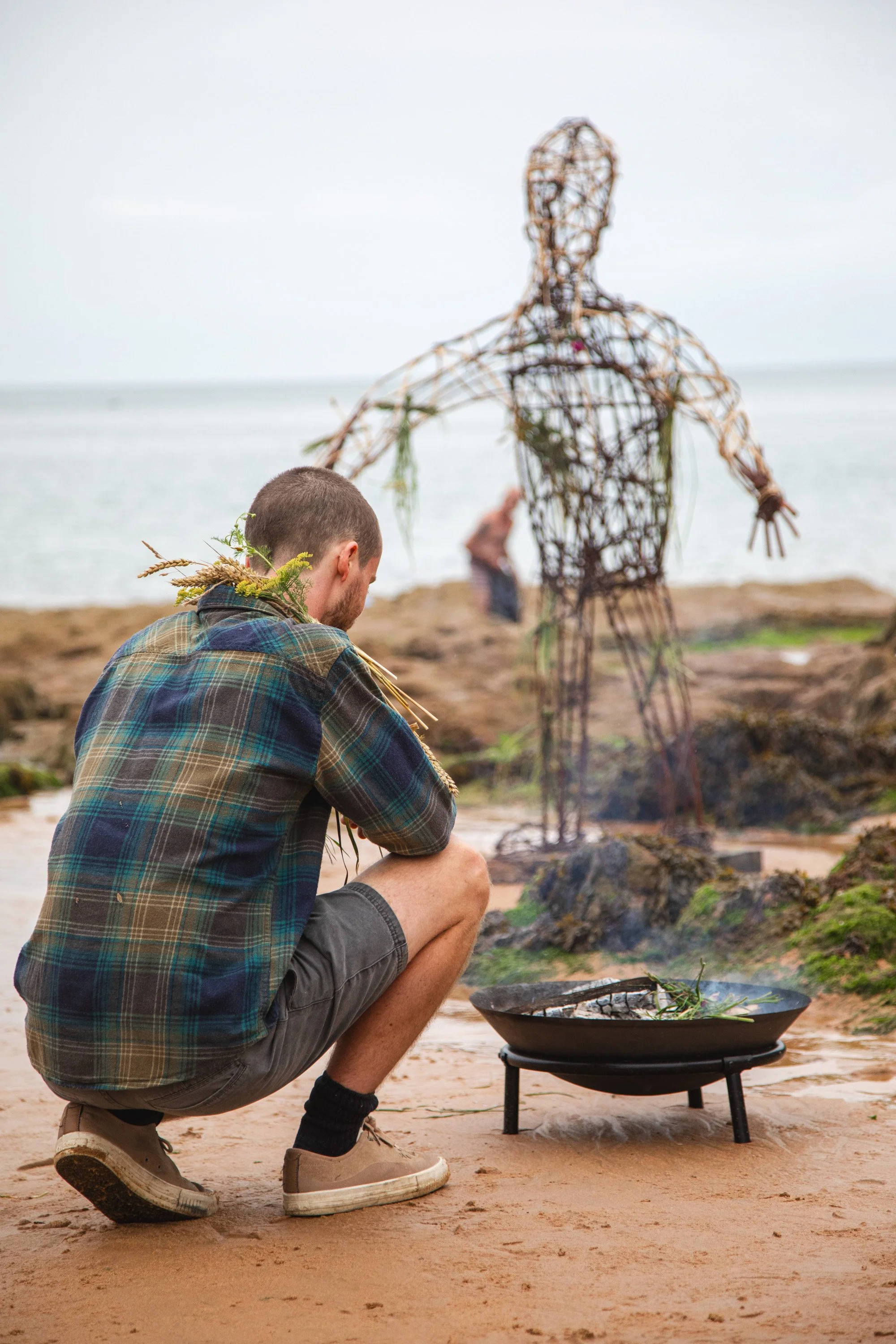
Painter and participatory artist Olha Pryymak brought the Kupala Festival to Jersey for the first time. A midsummer Slavic tradition celebrating nature’s abundance, the festival united makers and performers from across Jersey’s diverse community, including artists from Ukraine, Somalia, Portugal, Ireland and Jersey. Activities included making floral crowns; adorning a Mavka costume (camouflage) with Jersey flora ( worn in the trenches in Ukraine as protection against Russian strikes); crafting William Bock’s plant-rope; listening to the Lullaby Choir and to the Milk Songs installation by Fozia Ismail; talks on the colonial legacies of local Jersey foods and on regenerative farming practices; a parkour performance in the Mavka costume; and a procession to the sea carrying the 100-metre rope, at the end of which participants sang together and enjoyed borscht, a sour summer soup.
Mariana is a Postdoctoral Research Associate at the Heritage for Global Challenges Research Centre in York, where she looks at how migration between waterscapes and landscapes shapes cultural heritage, belonging, and ways of knowing the world. Her aim is to document and understand how heritage is harnessed by communities in contexts of displacement.
She is supporting Abundant Futures with research and data collection. Her work focuses on investigating whether migrant-led social change on a larger scale is possible, as well as the challenges, opportunities, lessons learned, and impact of such efforts. This involves conducting interviews with project participants, meeting with stakeholders, and creating a report with recommendations for policymakers.
Project supported by:
Commissioner: ArtHouse Jersey Producer: Karen Le Roy Harris (2024), Robyn Cabaret (2024, 2025, 2026) Assistant Producer: Scott Evans Contributing artists / organisations: Counterpoints, dhaqan collective, Kaajal Modi, Mariana Pinto Leitão Pereira, Olha Pryymak, William Bock Local collaborators: Jersey Heritage, L’Office du Jèrriais, Jersey Youth Service, the Diversity Network, Andium Homes, Dough Rye Me Photo credits: Mark Fox, Karen Le Roy Harris, Scott Evans, Kaajal Modi, Mariana Pinto Leitão Pereira, William Bock