Deluge
In 2022, Art Walk Projects invited three artists to collaborate on a project titled Deluge that would link three saltmarsh locations: in Barrow-in-Furness, Cumbria; East Lothian, Scotland; and The Wadden Sea, Netherlands. The three coastlines are all based at important saltmarsh locations, containing crucial ecosystems, which play an integral part in tidal wetland systems and in sequestering global marine carbon.
The project is a collaboration between Art Walk Projects (Edinburgh); Art Gene (Barrow-in-Furness); and Anna-Rosja Haveman PhD candidate at the University of Groningen (The Netherlands).
Taking the form of a relay, Linde Ex, Dana Olărescu, and Oscar van Heek each took time to travel to these saltmarsh locations looking at ways of engaging with the climate emergency specific to each coastline.
During 2023, a series of community engagement works was programmed for Portobello, Edinburgh, with a touring exhibition involving the three saltmarsh habitats planned for 2024. Reflections on the first residency can be found in Art Walk Projects’ Salt publication.
Saltmarshes are coastal wetlands that are flooded and drained by salt water brought in by the tides. They provide shelter, food, and nursery grounds for birds, fish, insects and other wildlife. Additionally, they help to protect the coast by preventing the shorelines from damage by incoming waves. Their benefits are particularly significant in light of the destruction caused to coastal communities by storms and flooding which are likely to increase as we experience climate change. They are also an excellent source of carbon storage; per unit, they store as much carbon as tropical forests. Yet, in the UK, only 45.000 hectares are left compared to 1 million hectares of peatland.
And yet, saltmarshes are not perceived to be as ‘attractive’ as other natural assets including beaches, sand dunes, trees and more. As a result, Dana is investigating the relationship between saltmarshes, the climate crisis, and advertisement. The 2022 residency prompted the idea to design a series of artist-made positive advertisements of saltmarshes which will be displayed on large billboards in the three project locations. These will be aimed at local residents and stakeholders who can learn about this incredible habitat and its benefits.
In 2023, Dana conducted two walks in Edinburgh to familiarise locals with her research, and a workshop in Barrow-in-Furness.
The first walk and talk took place in Aberlady Bay Nature reserve, the first nature reserve in the UK. Dr Helena Simmons and Dr Haley Arnold from the Green Shores Project joined to explain about creating 30,000 square metres of young salt marsh within the Dornoch Firth, the Tay and the Eden Estuaries. Attendees were then invited to explore the saltmarsh in silence, tuning up to the site, and ultimately sharing their favourite moments with others. What if we shared our knowledge about this habitat and found ways to spread it widely in our cities and towns?
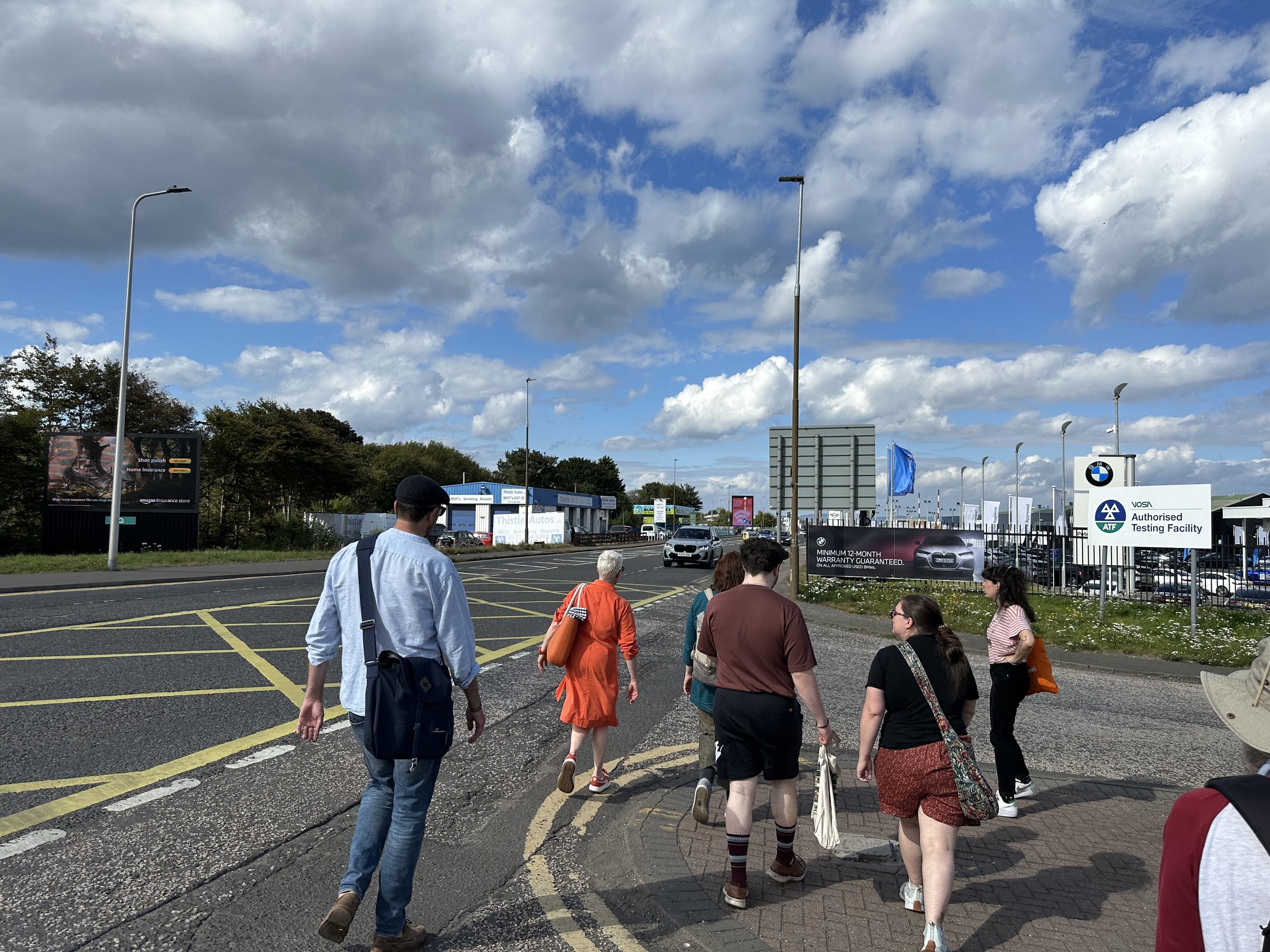
The second walk was led by visual artist, photographer, and Adblock Lambeth co-founder Camille Aboudaram in Portobello, Edinburgh.Camille discussed outdoor advertising and its impacts on our consumerist lifestyle, drawing a link with the climate crisis and our mental health. Attendees were led on a busy and polluted A road, then on a high street, learned how public spaces were managed, and what they could do to support or object stakeholders’ decisions.
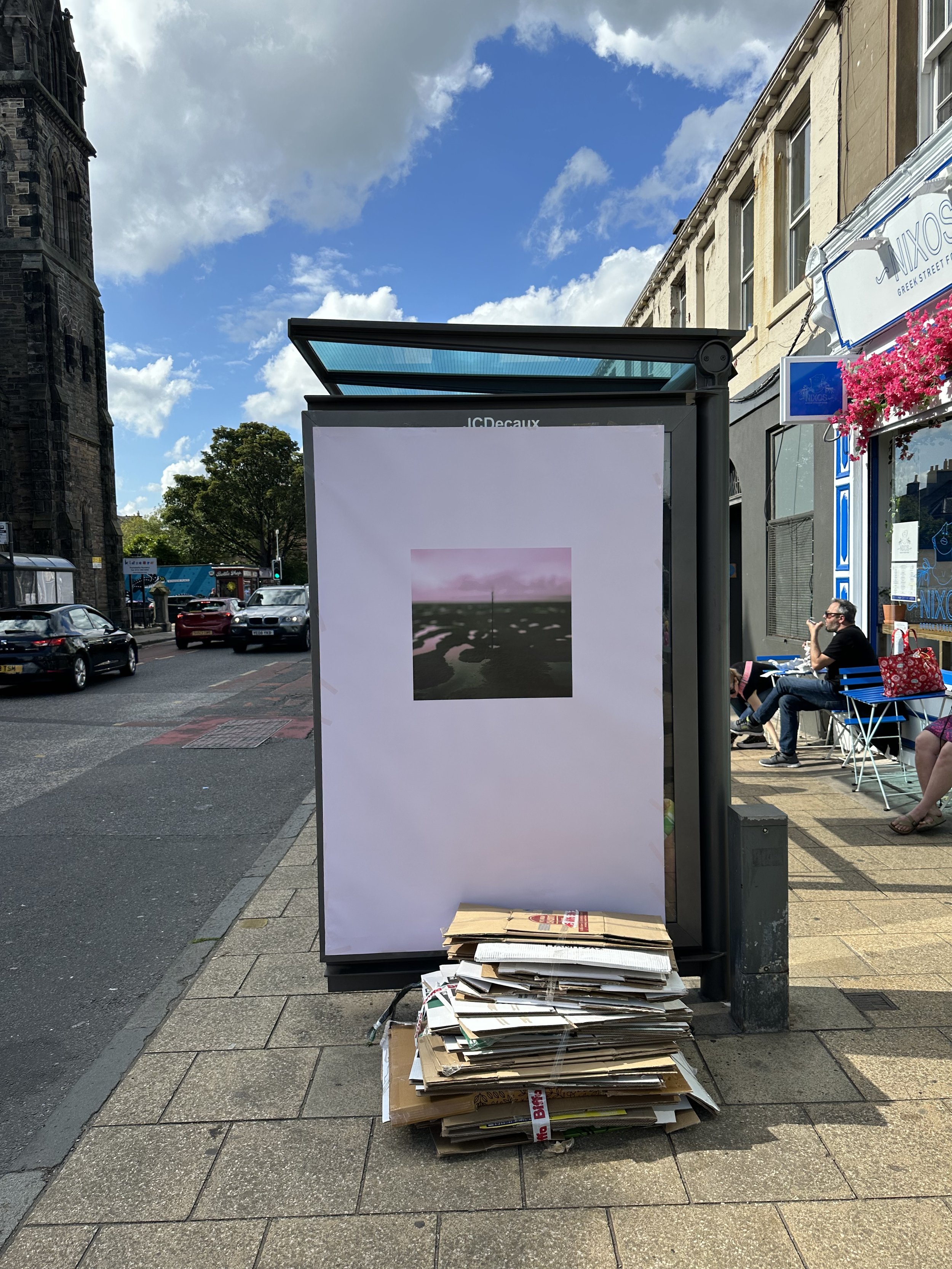
At the end of the walk, a poster displaying nature images came to everyone’s attention, allowing attendees to imagine alternatives to the status quo. What if community voices drowned out corporate public messaging?
As part of the Allotment Soup: Outdoor exhibition and Open Day at Art Gene, Dana led a workshop which looked at learnings from this incredible landscape, becoming more involved in its restoration, and making posters that celebrated saltmarshes using advertisement techniques. These will serve as inspiration for the 2024 travelling exhibition.
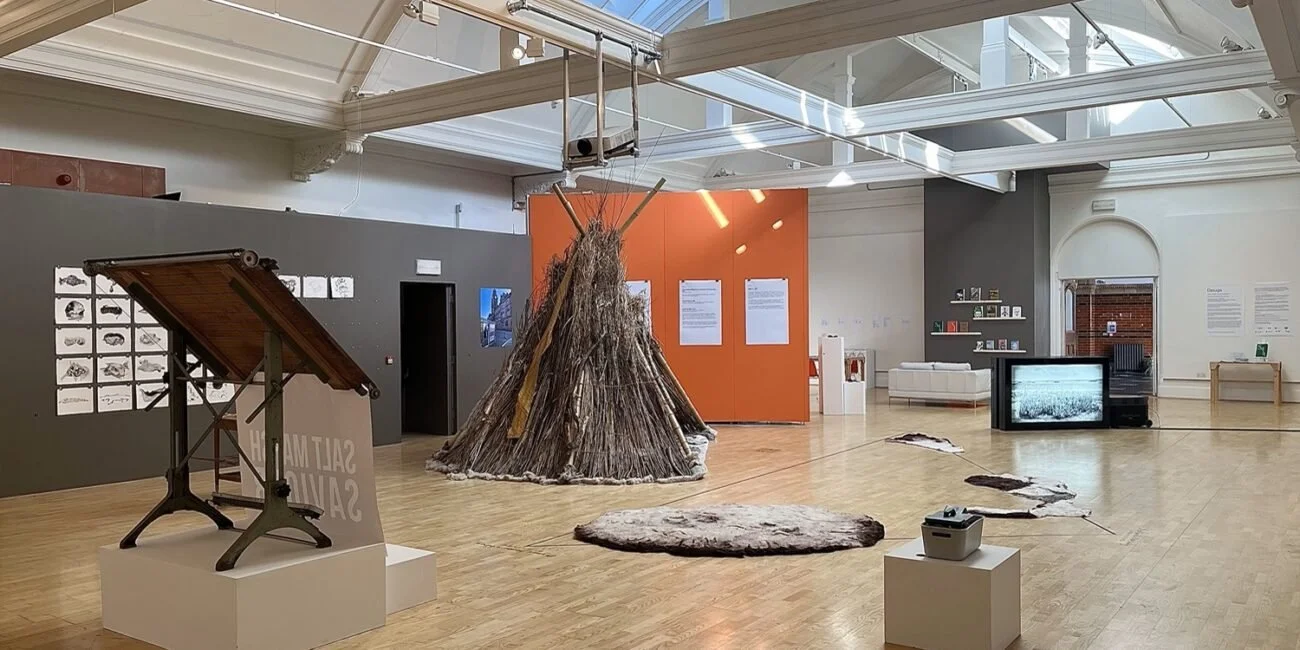
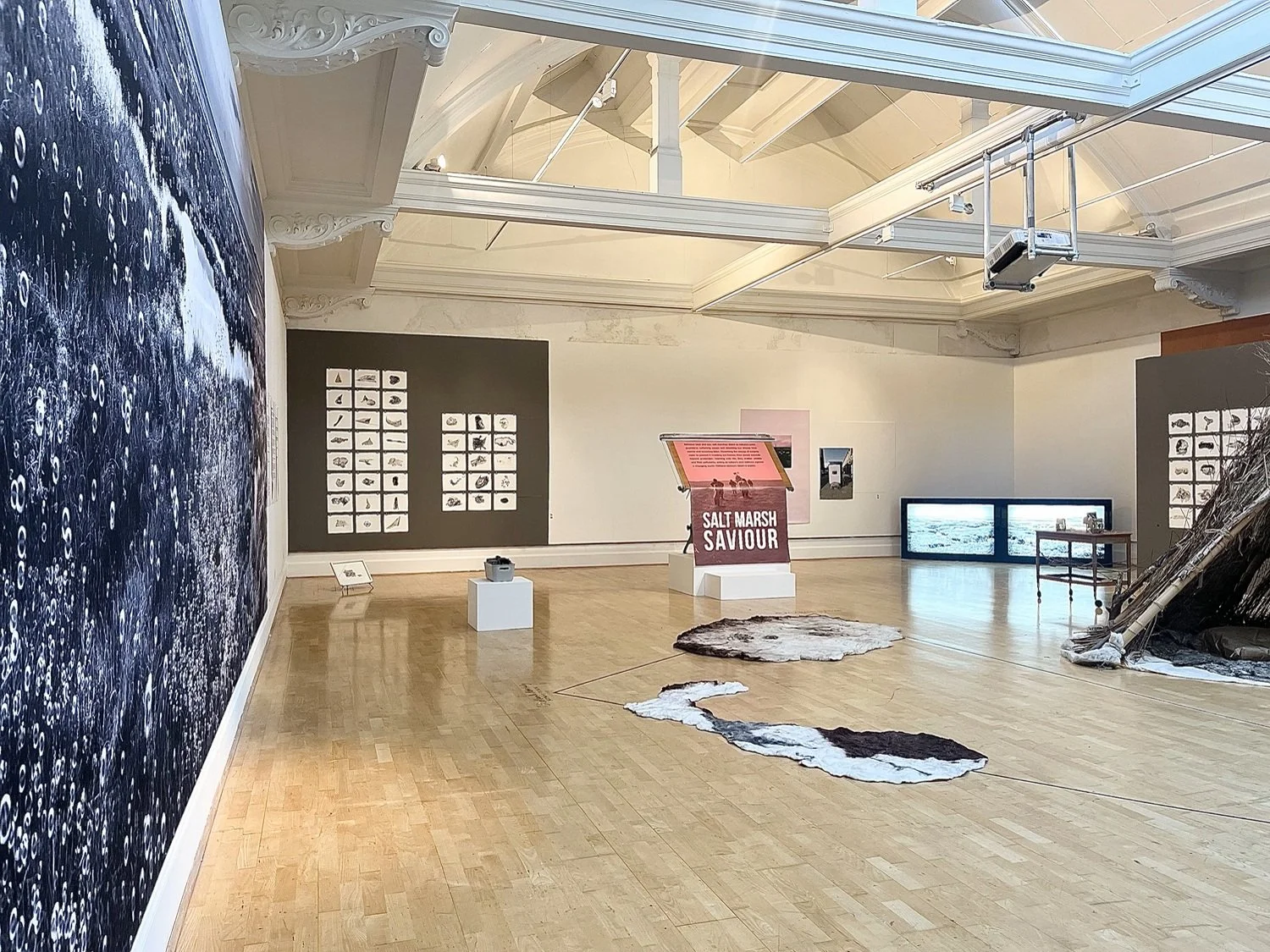
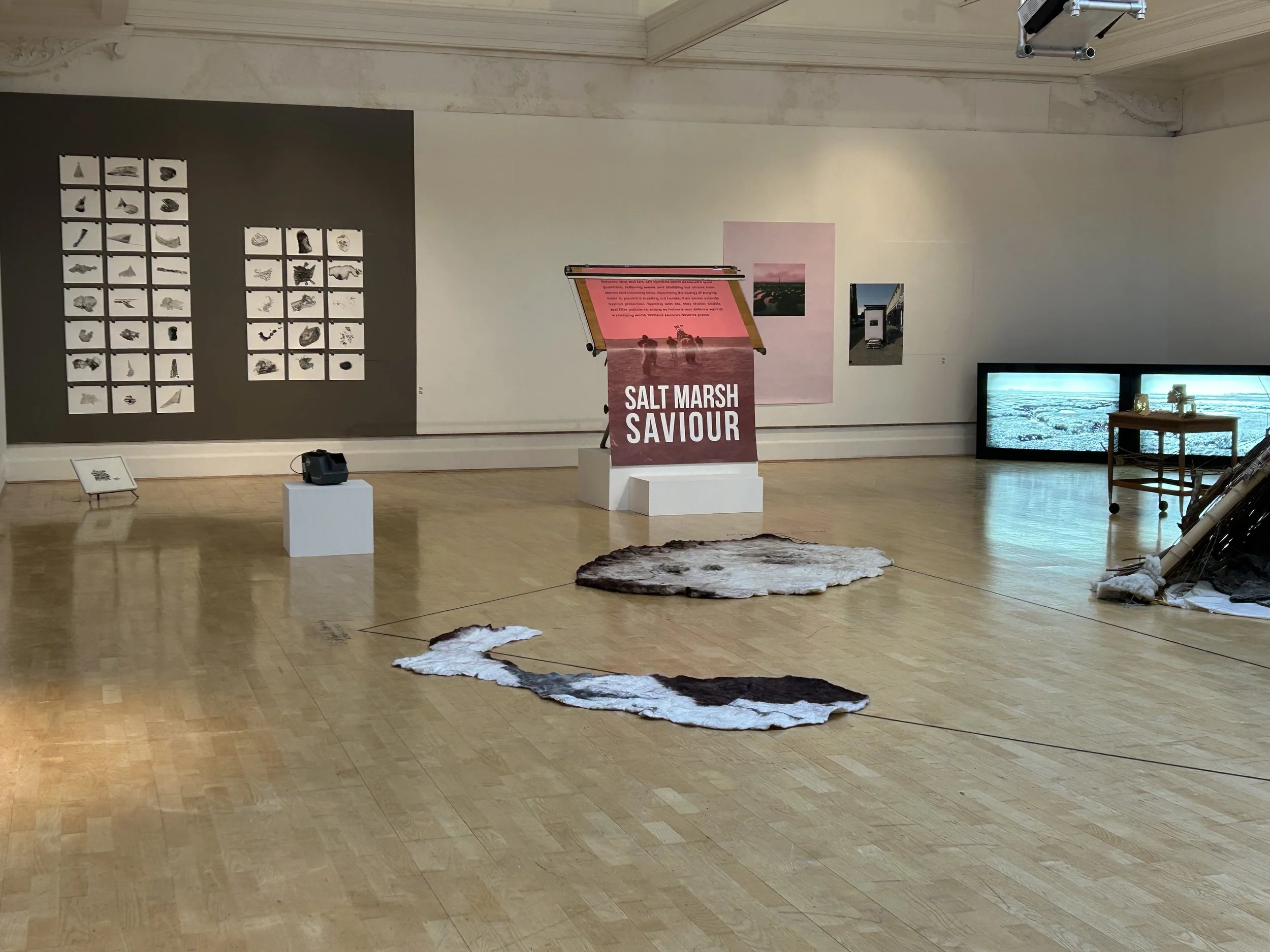
In 2025, the project culminated in the Deluge exhibition at Art Gene, Barrow-in-Furness. The review by Simon Sylvester at Corridor 8 can be read here.
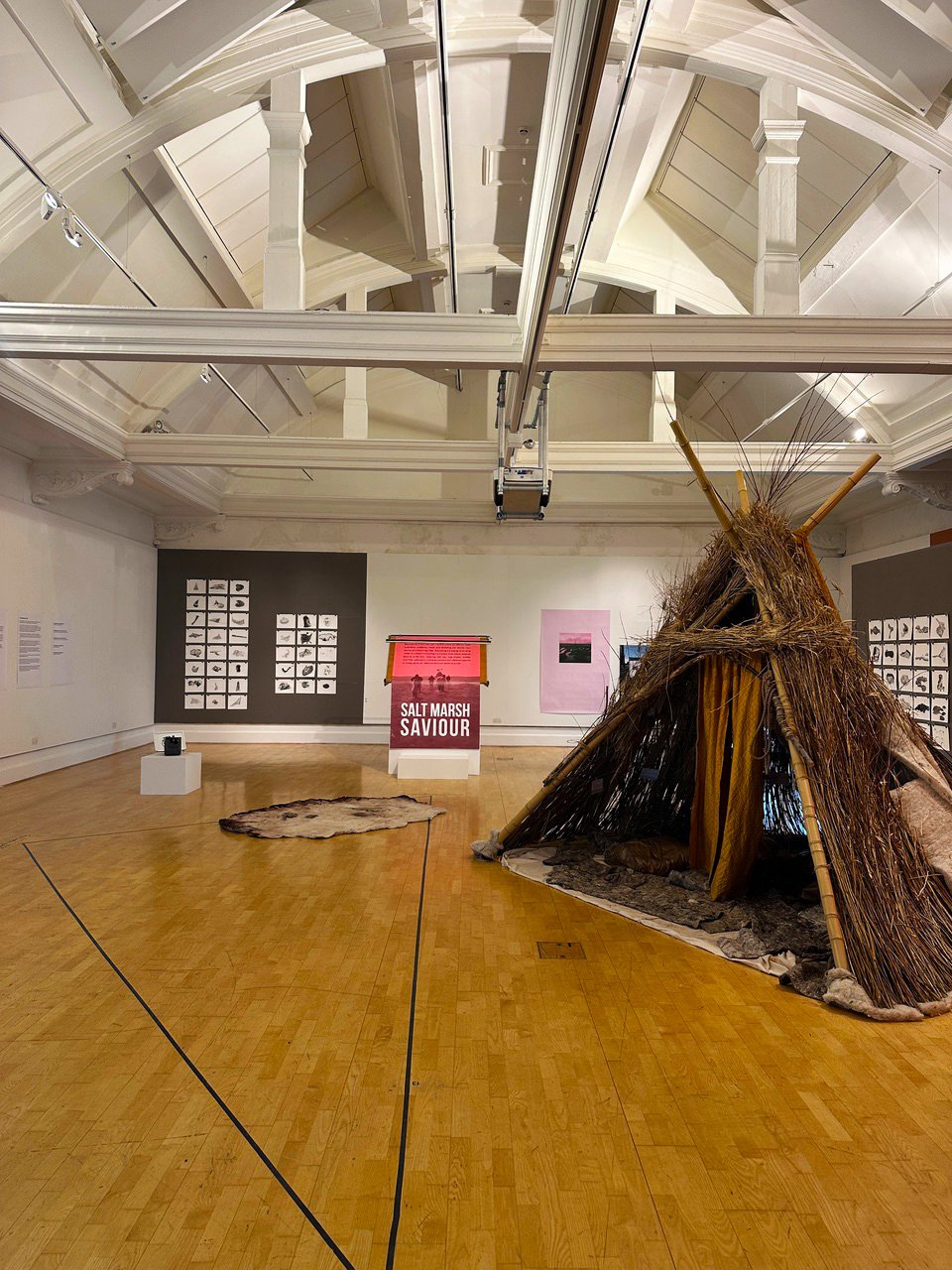
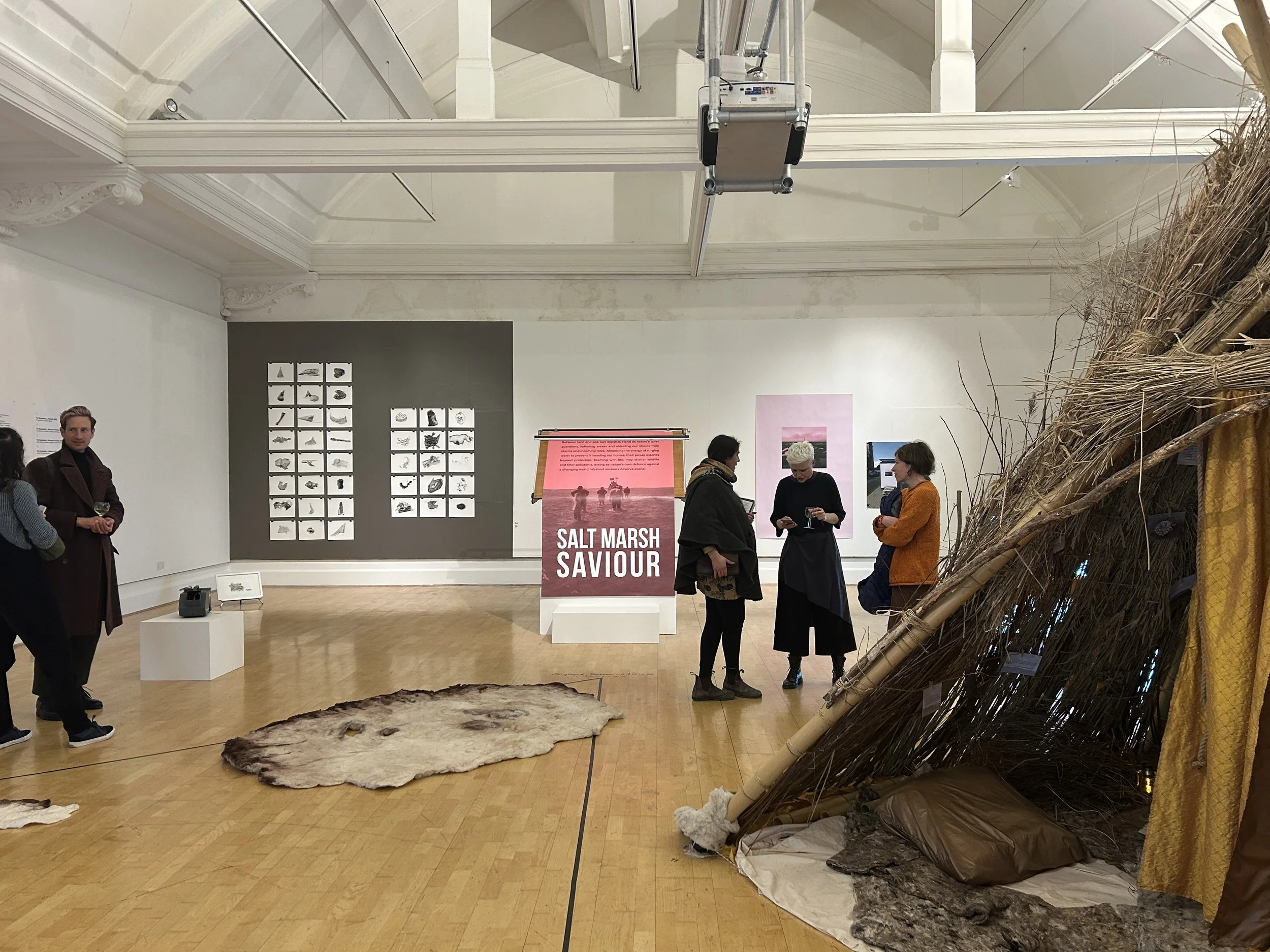
Dana created two pieces for the exhibition:
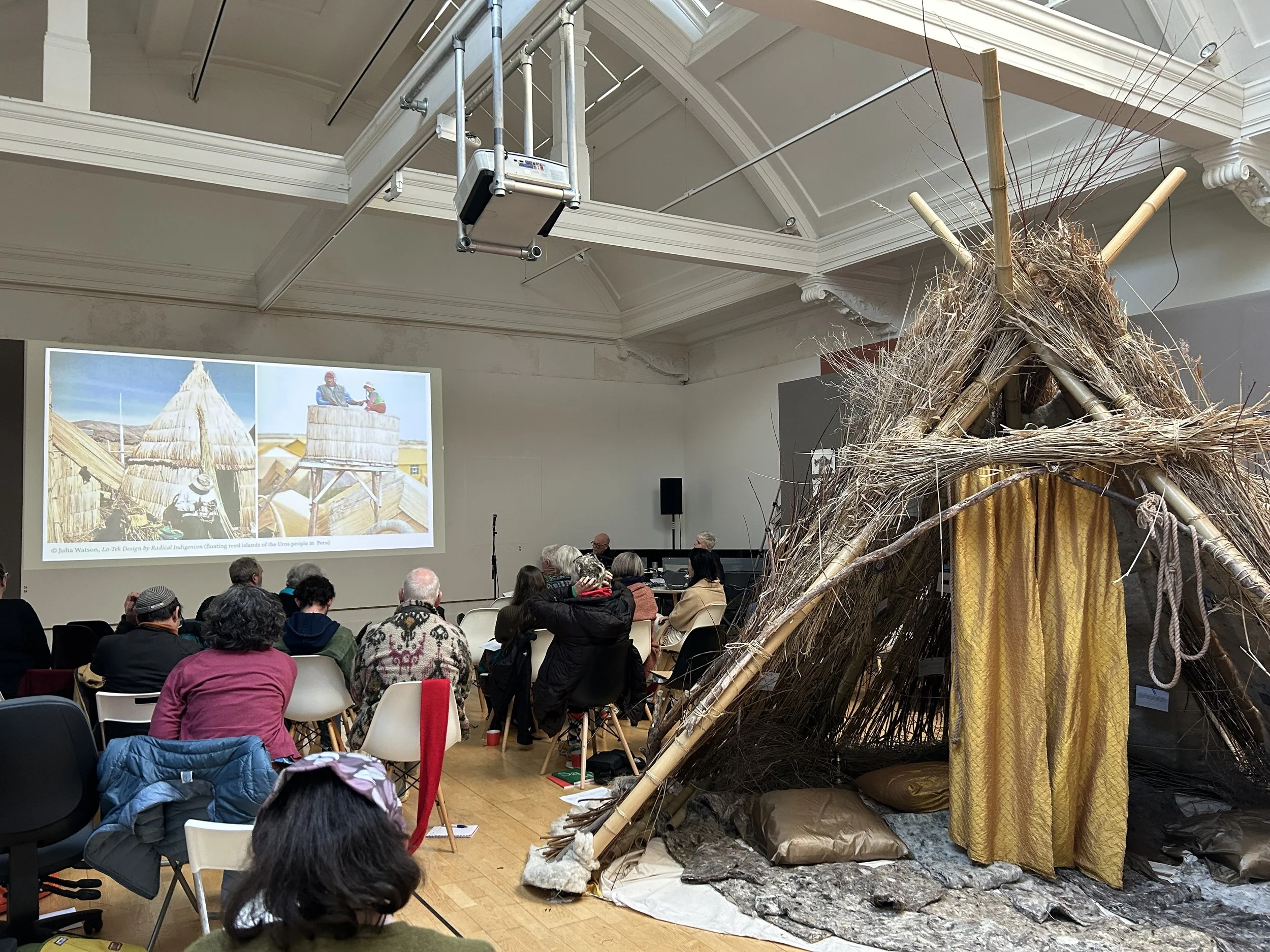
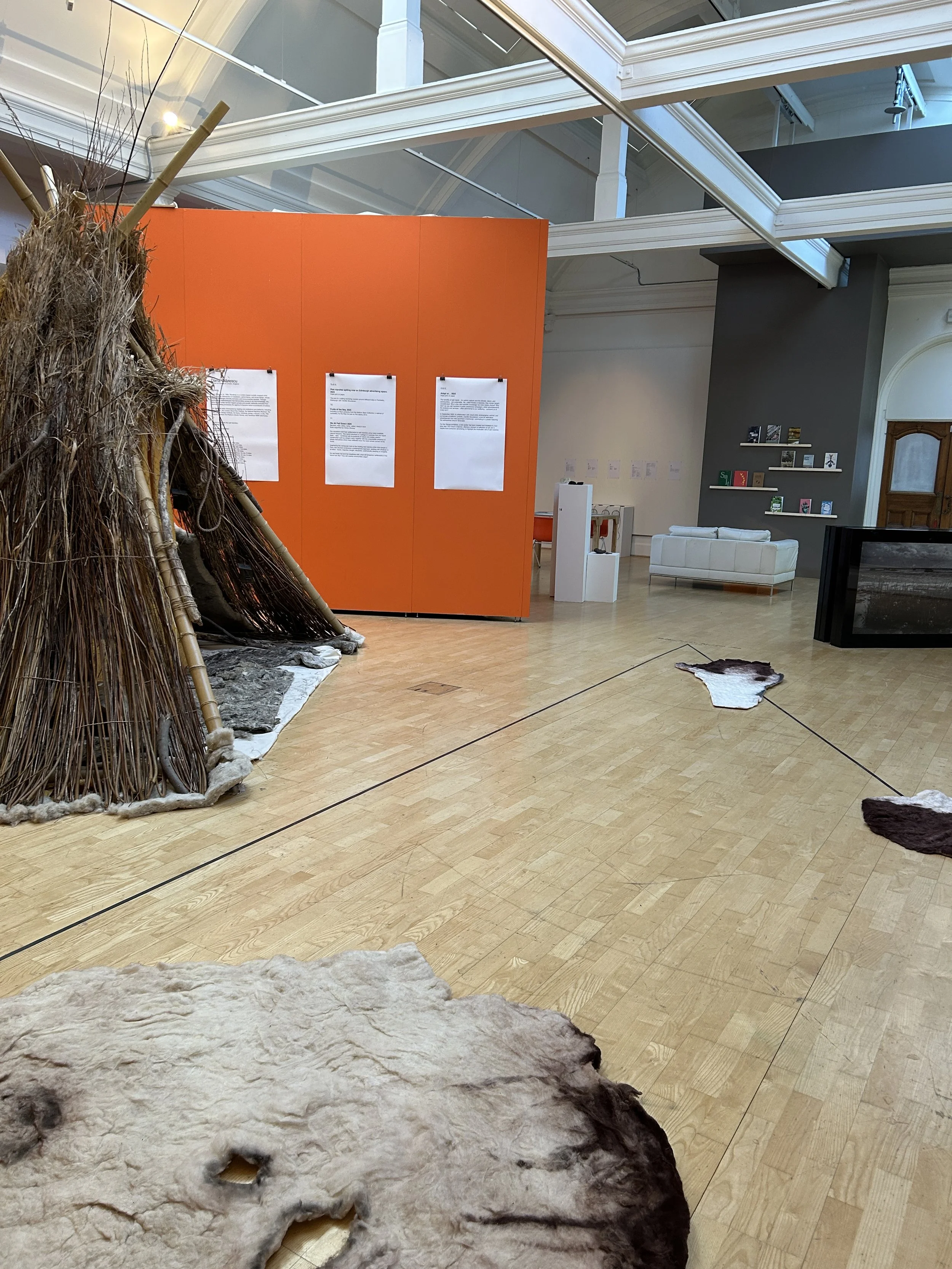
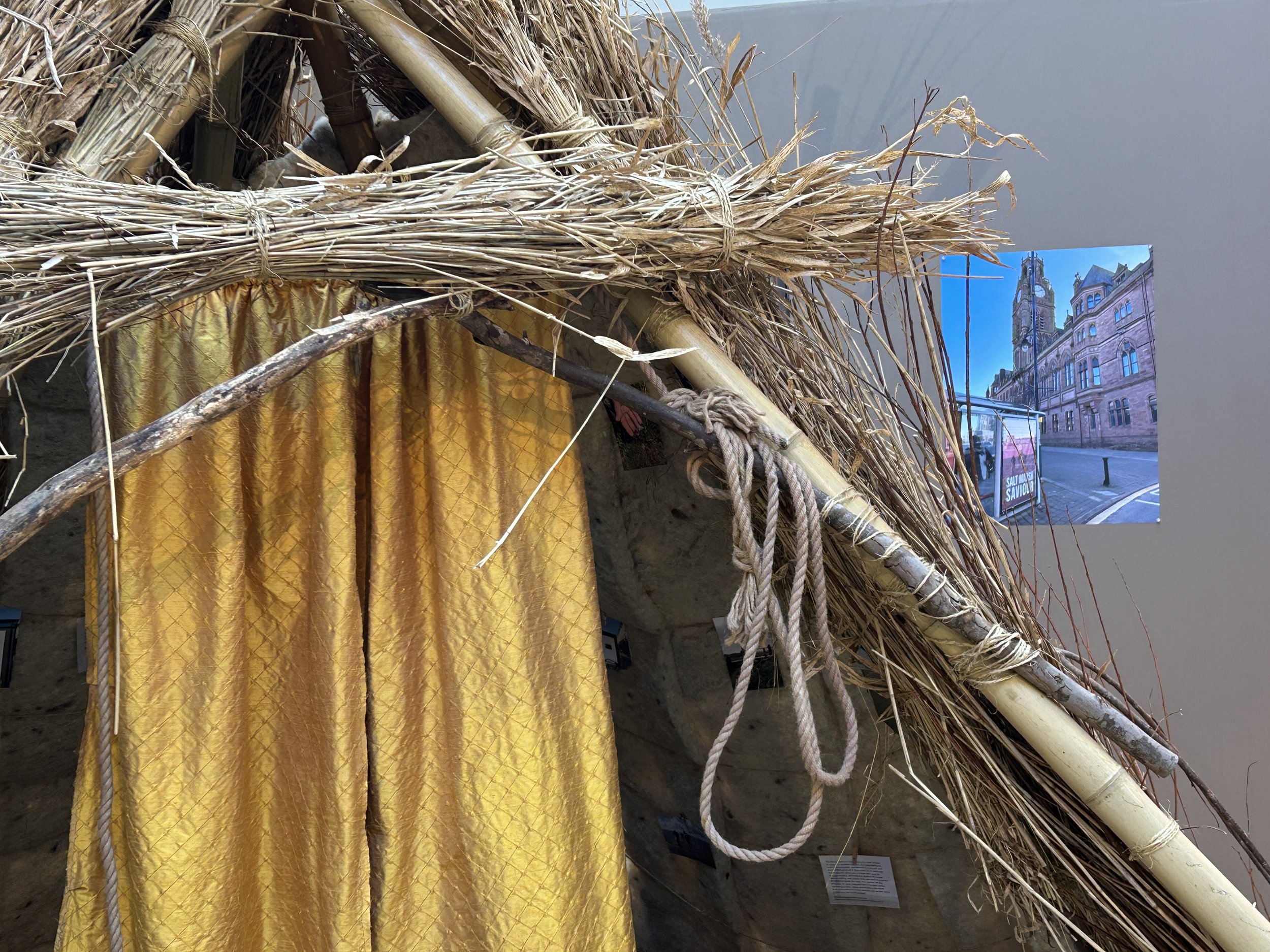
We All Fall Down!, a hybrid shelter blending traditional and modern materials. Our ancestors built their settlements on salt marshes using every available natural resource. Somewhere between a wigwam and a tepee, the structure invites visitors to step inside, rest, read, or reflect, offering a quiet retreat from the noise. It combines materials from the marsh itself like reed with byproducts of nature now widely used in construction, such as sheep’s wool, and the unavoidable presence of plastic derivatives, which have infiltrated even the most remote corners of the world. Inspired by the vernacular huts on the floating reed islands of the Uros people in Peru, this structure embraces a contemporary approach: working with whatever is at hand, found, imported, bought, discarded, aesthetically pleasing or unsightly. As sea levels rise and the coastlines shift, what will temporary settlements of the future look like? How will coastal communities adapt?
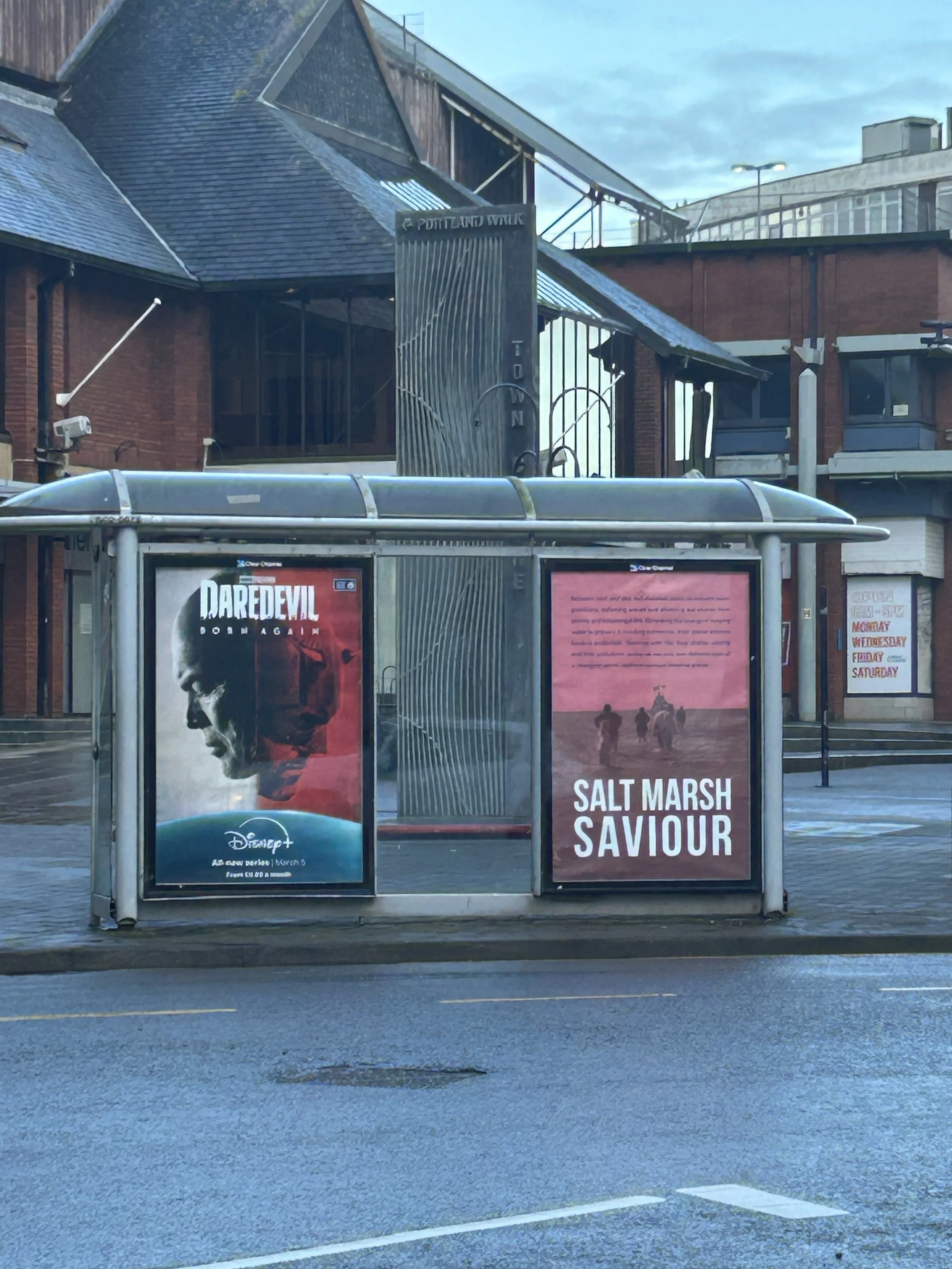
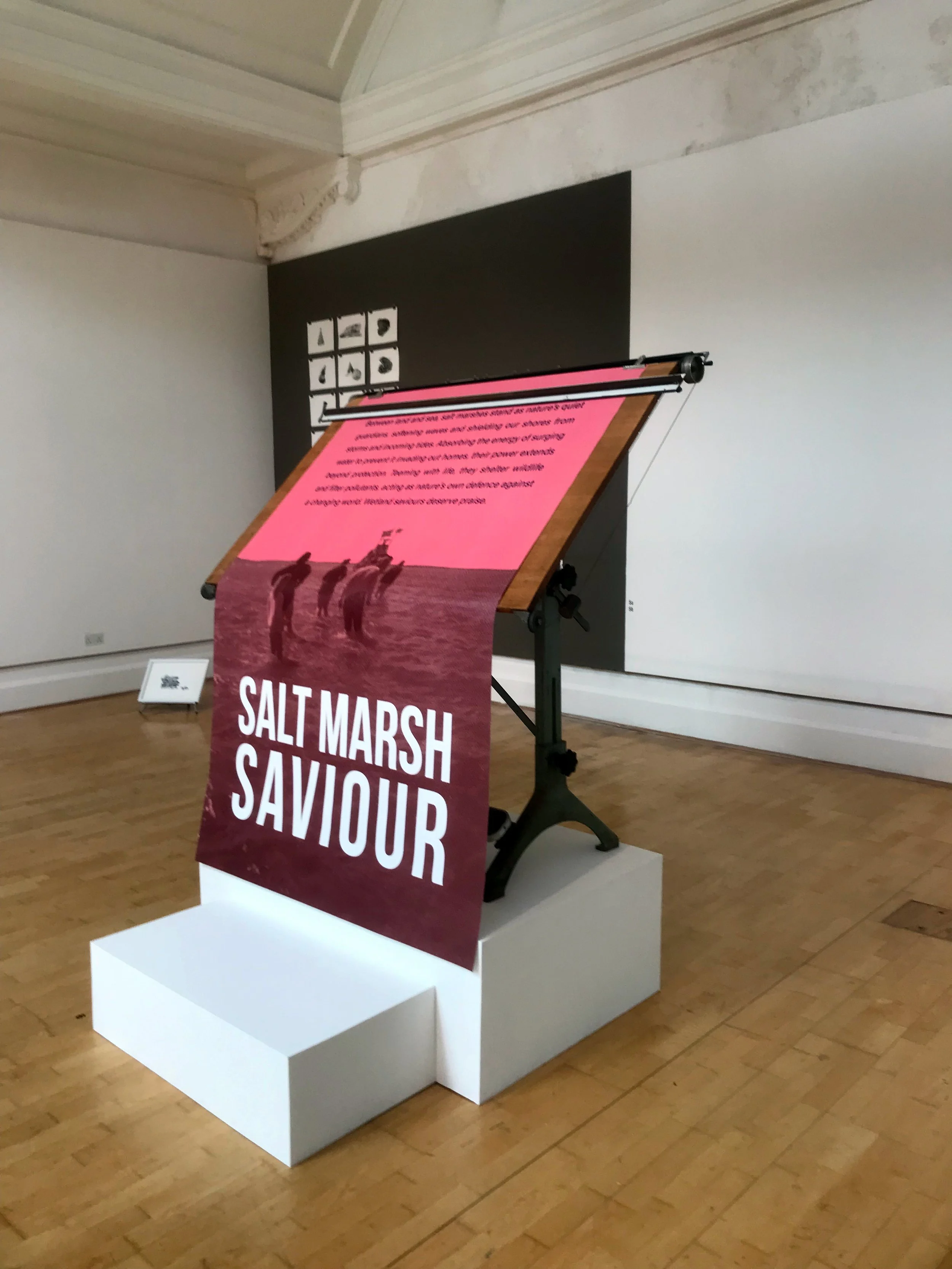
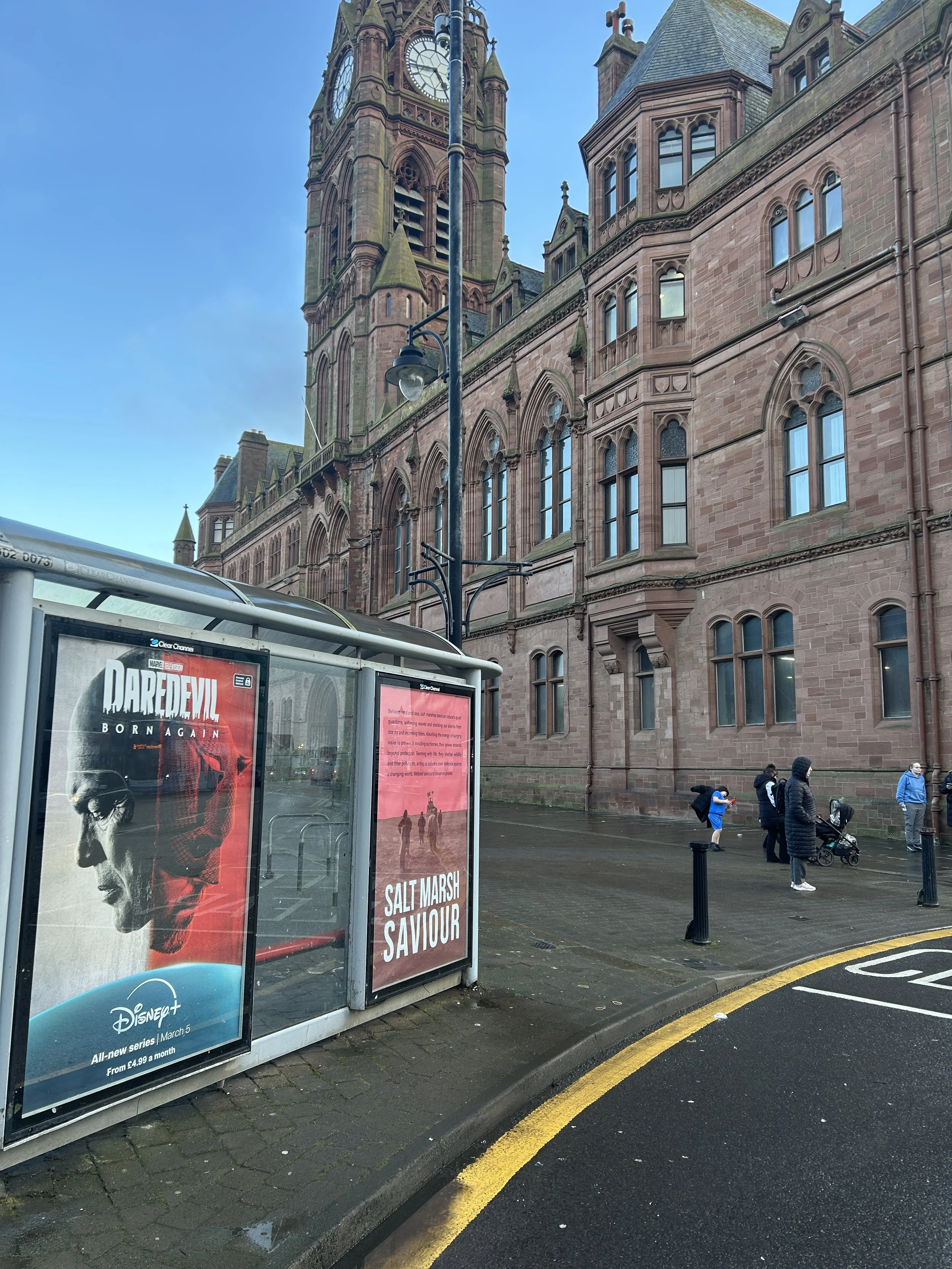
Adapt, or…, an advertisement-like poster placed at a busy bus stop in Barrow-in-Furness. A duplicate of this poster has been transformed into a saltmarsh altar within the exhibition. This project builds on a collaboration with visual artist, photographer, activist, and Adblock Lambeth co-founder Camille Aboudaram. In September 2023, Dana and Camille launched a one-off alternative advertisement tour in Edinburgh, culminating in a poster featuring the salt marshes around Silverdale. For Deluge, a new poster has been installed at a bus stop near The Forum in Barrow, offering a break from consumer advertising, highlighting the vital role of salt marshes. The benefits of salt marshes, for the climate, nature, and communities, are undeniable. Yet, unlike forests or beaches, they remain largely uncelebrated. Why is this vital scientific knowledge not more widely shared? Why don’t we see salt marshes in public awareness campaigns, while advertisements for products and services, often detrimental to our wellbeing, surround us at every turn?
The text on the poster reads:
Between land and sea, salt marshes stand as nature’s quiet guardians, softening waves and shielding our shores from storms and incoming tides. Absorbing the energy of surging water to prevent it from invading our homes, their power extends beyond protection. Teeming with life, they shelter wildlife and filter pollutants, acting as nature’s own defence against a changing world. Wetland saviours deserve praise.
Dana also presented the artworks’ concept and her experience of taking part in the project at the Deluge Conference. This included conversations and presentations from the Deluge artists, ecologists and salt marsh experts, connecting the three tidal wetland saltmarsh ecosystems and discussing their crucial role in marine carbon sequestration.
The project was supported by:
Commissioner: Art Walk, Art Gene Curators: Rosja Haveman, Rosy Naylor, Maddi Nicholson Programme associate: Miranda Hill Artwork technical expertise and construction: Clinton Rimmer Photo credits: Camille Aboudaram, Anna Rosja Haveman, Oscar Van Heek, Miranda Hill, Charlie MacKeith, Rosy Naylor, Maddi Nicholson, Dana Olărescu